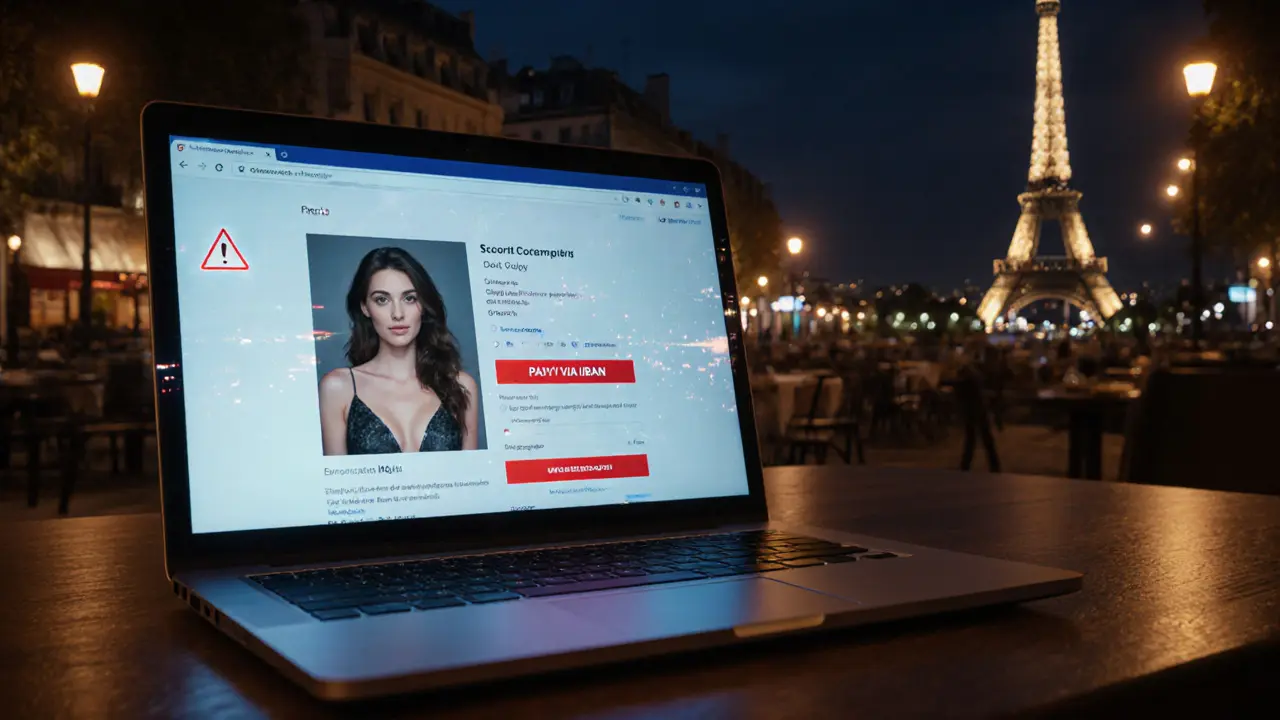
How to Spot a Fake Escort Profile in Paris - Red Flags and Verification Tips
Learn how to identify fake escort profiles in Paris with clear red‑flag signs, verification tools, and reporting steps to stay safe online.
- Oct, 22 2025
- 0 Comments
When navigating the world of companion services, Red flags, warning signs that indicate potential risk or untrustworthy behavior. Also known as warning signals, they help protect both parties from unsafe situations. Spotting these cues early can save you from embarrassment, legal trouble, or physical danger. One of the biggest allies in this process is Safety, a set of practices designed to minimize physical and emotional harm. Safety isn’t just about locking doors; it’s about creating a mindset that asks the right questions before a meeting. Red flags often show up during the verification stage. Verification, the act of confirming identity, reputation, and legitimacy of a client or companion can be as simple as checking a photo against a live video call, or as thorough as reviewing past client reviews on a trusted platform. If a person evades these steps, pushes for rapid payment, or refuses to share basic contact details, you’ve likely hit a red flag. Another critical component is Consent, the clear and enthusiastic agreement to any activity, documented in real time. Consent should be an ongoing conversation, not a one‑time checkbox. When a client or escort sidesteps this dialogue, glosses over boundaries, or pressures you into uncomfortable actions, that’s a glaring warning sign. Finally, think about Emergency contacts, pre‑selected individuals or services you can call if something goes wrong. Having a trusted friend, a hotel concierge, or a local police number on speed dial transforms a risky encounter into a controlled situation. If no one knows where you’ll be, or you’re reluctant to share details, the risk level spikes dramatically. By weaving safety, verification, consent, and emergency contacts into every step, you turn vague intuition into concrete safeguards.
The real power of red flags lies in how they guide your actions. First, treat every new interaction as a checklist: does the profile have clear photos? Is there a verified ID? Does the person reply promptly to a video call request? If any answer is “no,” that’s a red flag demanding a pause. Second, pay attention to communication style. Pushy language, vague promises, or sudden changes in meeting location often hint at hidden motives. Third, evaluate payment methods. Secure platforms that hold funds in escrow are preferred; requests for cash, wire transfers, or cryptocurrency without a clear escrow process should raise doubts. Fourth, trust your gut but back it up with facts. A feeling that something’s off is valuable, yet confirming it with verification steps removes guesswork. Finally, always share your itinerary with a trusted contact. Let them know the venue, time, and any backup plans. If you ever feel uncomfortable, a quick call can trigger a safety net. By treating red flags as a structured set of data points, you move from reactive fear to proactive control, making each encounter as safe and enjoyable as possible. Below, you’ll find a curated collection of articles that dive deeper into each of these areas, from detailed safety protocols to real‑world examples of red flags in action.
Learn how to identify fake escort profiles in Paris with clear red‑flag signs, verification tools, and reporting steps to stay safe online.