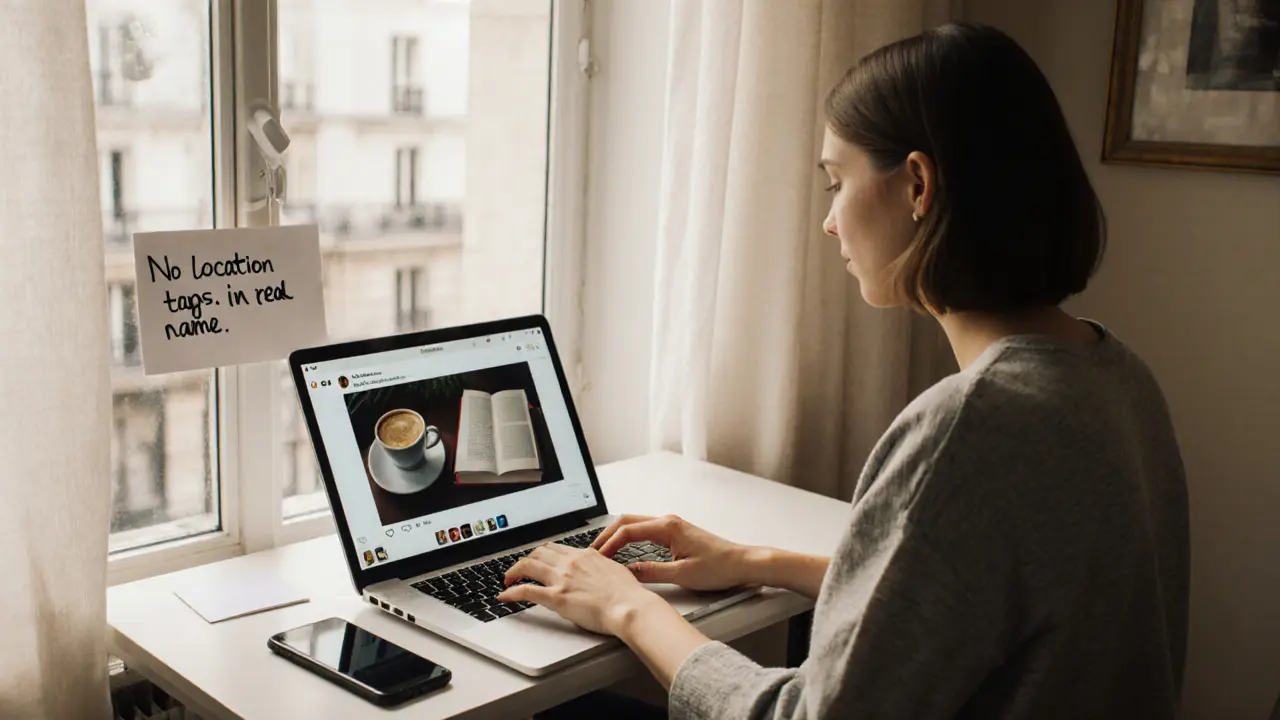
Before social media, Paris escorts relied on word-of-mouth, discreet flyers, or agencies that took half their earnings. Today, a single Instagram post or a well-timed TikTok video can bring in a month’s rent - but it can also land you in legal trouble, doxxed, or targeted by predators. The rise of platforms like Instagram, OnlyFans, and Telegram has turned the Paris escort industry into a high-risk, high-reward digital marketplace. This isn’t just about advertising anymore. It’s about survival, identity, and safety in a city where the law walks a thin line between tolerance and crackdown.
How Social Media Became the New Front Door
In 2018, a Parisian escort named Léa stopped working with agencies after realizing she was making €2,000 a week - but only kept €600 after fees. She started posting curated photos on Instagram under a pseudonym, using hashtags like #ParisEscort and #ParisPrivateDinner. Within three months, her client base doubled. She didn’t need an agency. She didn’t need a phone number. Clients found her through DMs, paid via cryptocurrency, and met at Airbnb rentals she booked under her real name.
This isn’t rare. A 2024 survey of 127 active escorts in Paris found that 89% now use social media as their primary client acquisition tool. Instagram remains the most popular, followed by Telegram for private chats and OnlyFans for recurring income. Many use dating apps like Tinder as a funnel - they match with potential clients, then redirect them to more discreet platforms.
Why? Because social media gives control. No middleman. No fixed rates. No curfews. You set your own hours, your own prices, and your own boundaries. For many, it’s the first time they’ve felt like their own boss.
The Hidden Costs: Privacy, Safety, and Legal Gray Zones
But control comes with danger. In 2023, a 24-year-old escort in the 15th arrondissement was doxxed after a client shared her Instagram handle on a Reddit forum. Within hours, her real name, address, and workplace were posted. She received death threats. Police refused to act - because her work was technically legal under France’s “Nordic model,” which criminalizes clients, not sellers. She moved out of Paris and quit.
France doesn’t ban sex work. But it bans advertising it. Article 225-10 of the French Penal Code makes it illegal to “promote or facilitate prostitution.” Social media posts that imply sexual services are often flagged as violations. Instagram removes accounts without warning. Telegram channels get shut down. Banks freeze accounts linked to escort income.
Many escorts now use burner phones, encrypted apps, and fake names. Some create multiple personas - one for Instagram, another for OnlyFans, a third for client communication. One woman in Montmartre told me she uses a voice changer app when talking to clients and never shows her face on video. “If they know who I am,” she said, “they think they own me.”
Who’s Really Profiting?
While some escorts thrive, others are exploited. A 2024 report by the French NGO L’Autre Rive found that 31% of women working online in Paris were being controlled by third parties - often ex-boyfriends, former agencies, or traffickers posing as managers. These people take a cut, dictate schedules, and use social media to track movements.
Platforms don’t help. Instagram’s algorithm favors engagement, not safety. A post with a suggestive caption and a blurred background gets more reach than one with a plain photo and a clear disclaimer. Many escorts feel pressured to sexualize their content just to be seen. “I used to post coffee and books,” one woman shared. “Now I have to pose in lingerie to get 500 followers. It’s exhausting.”
Meanwhile, companies like OnlyFans take 20% of earnings. Payment processors like Stripe and PayPal routinely freeze accounts linked to adult content - even when the content is legal. Some escorts now use crypto wallets or peer-to-peer apps like Cash App, but that brings its own risks: scams, chargebacks, and no recourse if someone disappears after paying.
How the Industry Is Adapting
Despite the risks, the Paris escort industry is evolving. A growing number of workers are forming collectives - informal networks that share tips on safety, legal rights, and platform loopholes. One group, called Parisian Voices, runs a private Telegram channel with over 800 members. They share: which agencies are predatory, which clients have been flagged, how to spot fake profiles, and where to get free legal aid.
Some are going further. A few escorts now offer “digital detox” packages - no social media, no phone calls, just in-person meetings arranged through trusted contacts. Others are pivoting to content creation, selling lifestyle blogs, travel guides, or even online coaching on “independent womanhood.” One woman who used to charge €300/hour now sells a €49 e-book called “How to Work for Yourself in Paris Without Getting Caught.” It’s sold more than 2,000 copies.
There’s also a quiet push for legal reform. In 2025, a coalition of sex workers and human rights groups filed a petition calling for decriminalization of advertising for consensual adult services. They argue that banning online promotion doesn’t stop sex work - it just makes it more dangerous. The petition has gathered over 45,000 signatures.
What Works - And What Doesn’t
If you’re an escort in Paris trying to use social media safely, here’s what the most experienced workers swear by:
- Never use your real name - not on profiles, not in bios, not in captions.
- Use a VPN and encrypted messaging - Signal or Telegram with self-destructing messages.
- Never share location tags - even “Paris” can be traced to a neighborhood.
- Use a separate email and phone number - one for clients, one for everything else.
- Screen clients - ask for ID, check their socials, avoid anyone who refuses to video call first.
- Keep records - save chat logs, payment receipts, and booking details in encrypted files.
And avoid these traps:
- Posting selfies with landmarks (Eiffel Tower, Louvre) - they’re easy to geotag.
- Using the same username across platforms - it links your identities.
- Accepting cash from strangers you met online - it’s a common scam tactic.
- Believing “I’m careful, I won’t get caught” - algorithms don’t care how careful you are.
The Future Is Unclear - But It’s Digital
The Paris escort industry won’t go back to the old ways. Agencies are shrinking. Clients want direct, private, fast connections. Social media gave women autonomy - but also exposed them to new forms of control.
What’s next? More AI-generated content? Deepfake blackmail? AI bots pretending to be clients to trap workers? The tools are already here. Some escorts are experimenting with AI avatars to interact with clients without revealing their face. Others are using blockchain to create verifiable, anonymous client ratings.
One thing is certain: the digital age didn’t destroy the Paris escort industry. It transformed it. And like every transformation, it brought power - and peril. The women working in it now aren’t just selling time. They’re navigating a minefield of technology, law, and human behavior - and they’re doing it alone, with no safety net.
If you’re curious about this world, don’t romanticize it. Don’t demonize it. Listen to the women who live it. They’re not statistics. They’re people trying to survive in a system that doesn’t want them to succeed - but can’t stop them from trying.
Is it legal to be an escort in Paris?
Yes, selling sexual services is not illegal in France. But advertising, soliciting, or organizing sex work is. This is called the Nordic model. You can’t be arrested for working - but your Instagram post saying “private meetings available” could get you flagged, your account removed, and your bank account frozen. The law targets promotion, not the act itself.
Can social media get me arrested in Paris?
Not directly. Police don’t arrest people for posting on Instagram. But if your profile leads to evidence of advertising - like direct offers for sex, payment details, or location hints - it can be used in a case against you. Authorities have used social media to build cases against agencies, clients, and even workers they believe are being exploited. Your posts can become evidence, even if you didn’t intend them to be.
How do Paris escorts avoid getting doxxed?
They use pseudonyms, burner phones, encrypted apps, and avoid sharing any personal details - even small ones like favorite cafes or neighborhood names. Many use AI tools to blur their faces or alter their voices. Some create entirely separate digital identities for work and personal life. The most experienced workers treat their online presence like a locked safe: only what’s absolutely necessary is visible.
Do banks block escort income in France?
Yes. Major banks like BNP Paribas, Société Générale, and Crédit Agricole routinely freeze accounts linked to adult content platforms like OnlyFans or Patreon. They don’t always explain why. Many escorts now use cryptocurrency wallets, prepaid cards, or peer-to-peer payment apps like Cash App or Revolut - but these aren’t foolproof. Scams and chargebacks are common.
Are there support groups for escorts in Paris?
Yes. Groups like L’Autre Rive and Parisian Voices offer free legal advice, safety training, and mental health support. They run private Telegram channels and host monthly meetups in safe spaces. These groups are not affiliated with the government - they’re run by former and current sex workers. Access is usually by referral or invitation to protect members’ privacy.